Budget
How Much Does a Wedding Actually Cost in 2026? A Real, Data-Backed Breakdown
By The Betwyne team · 4 min read · August 2, 2026
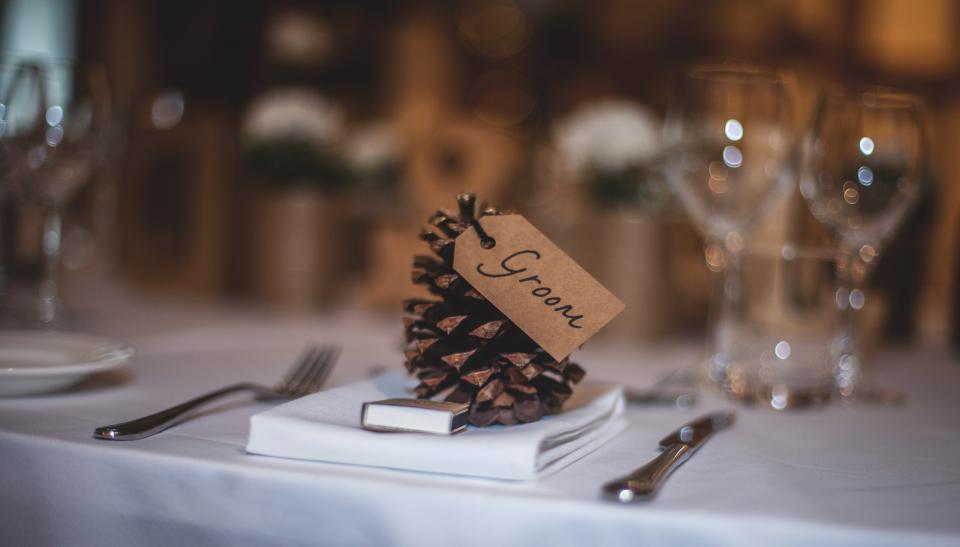
What weddings really cost in 2026 — the national averages, where the money actually goes, and the one number that predicts your total better than your zip code.
Wedding cost numbers online are all over the map, and most "averages" are close to useless because they blend a 200-guest ballroom with a 20-guest backyard. Here's the honest version: your total is driven less by where you get married and more by how many people you invite and what you refuse to compromise on.
Let's start with the real numbers, then get to the part that actually decides your total.
The average wedding cost in 2026
The average wedding in the U.S. costs about $34,200, according to The Knot's 2026 Real Weddings Study, which surveyed nearly 11,000 couples who married in 2025. Zola's data lands a little higher, around $36,000.
But treat that "average" with suspicion. A handful of very expensive weddings drag the mean upward, so the "average wedding" is a bit like the average family with 2.4 children — technically real, matches almost nobody's actual wedding. The more useful way to read it: couples largely spend what they decide to spend. Zola's data makes this almost comically clear — couples who set a budget under $15K spend about $8,900, those in the $15K–$40K range spend about $26,400, and those over $40K spend about $70,300. The budget you commit to up front is the single best predictor of your final number.
What actually drives the total
Three levers move a wedding budget far more than anything else:
- Guest count. Nearly every large line item — catering, bar, rentals, invitations, favors, the size of venue you need — scales with headcount. Cutting the list is the single most powerful cost lever you have.
- Venue + catering. Together these are almost always the largest slice of the budget.
- Your "non-negotiables." Most couples genuinely care about one or two things (the photos, the food, a live band). Spend there on purpose, and trim hard everywhere else.
Where the money actually goes
Here's what the big line items run on average, per The Knot's 2026 study:
| Line item | Average (U.S.) |
|---|---|
| Reception venue | $12,900 |
| Catering | ~$80 per guest |
| Photographer | $2,900 |
| Flowers | $2,700 |
| DJ | $1,700 |
| Band | typically 2–3× a DJ |
Notice that catering is quoted per guest — that's the guest-count lever in action. At ~$80 a plate, trimming 25 people off the list is roughly $2,000 in catering alone, before you count their share of the bar, rentals, invitations, and floor space. Your second cousin's new boyfriend is a surprisingly expensive stranger.
The number most couples miss: the buffer
Whatever total you land on, add a real contingency line — 5–10% is sensible. The over-budget stories almost always come from the same place: a dozen small "of course we need that" decisions in the final month, not one big splurge. Nobody blows the budget on the venue; they blow it on the eleventh thing that was "only $200."
What about by state — or in Canada?
Location moves the number a lot. In the priciest states — Rhode Island, New Jersey, and New York — averages push toward $50,000, while in Alaska, Nevada, and Utah they land near $20,000 or less (CNBC, all 50 states).
Planning in Canada? The national average runs roughly $30,000–$42,000 CAD (WeddingWire Canada / The Knot Global data), with Ontario (especially Toronto) at the higher end and provinces like Alberta and Quebec — particularly outside the big cities — often noticeably cheaper. As in the U.S., a city wedding can run up to ~25% more than the same wedding in a rural area, mostly on the venue.
Set a number you can actually act on
The point of a budget isn't the total — it's making the hundreds of small trade-offs downstream without stress. And since couples reliably spend close to whatever they budget, the number you set at the start matters more than any national average.
A budget you can see and adjust as real costs come in beats a spreadsheet you set once, name "Wedding Budget FINAL v3," and never open again. That's exactly what Betwyne's budget planner is built for — set your number, then track estimates against real costs, vendor deposits, and balances so the total stays honest as you book. Decide your number, protect your one or two non-negotiables, keep an eye on the guest list, and let everything else flex.
More guides
Budget
Wedding Budget by Guest Count: What 20, 50, and 150 Guests Really Cost
Guest count is the single biggest lever on a wedding budget. Here's the real per-guest math — and how the total shifts from an intimate 20 to a traditional 150.

Comparisons
The Knot, Zola, or Something Calmer? An Honest Look at Wedding Planning Apps
A fair comparison of the big wedding platforms — what The Knot and Zola do brilliantly, where their business model shows, and who's better off with a quieter, paid alternative.

Guests
How to Build (and Trim) Your Wedding Guest List Without the Guilt
The guest list drives your budget, your venue, and your stress level. Here's how to build it, how many will actually come, and a calmer way to make the cuts.